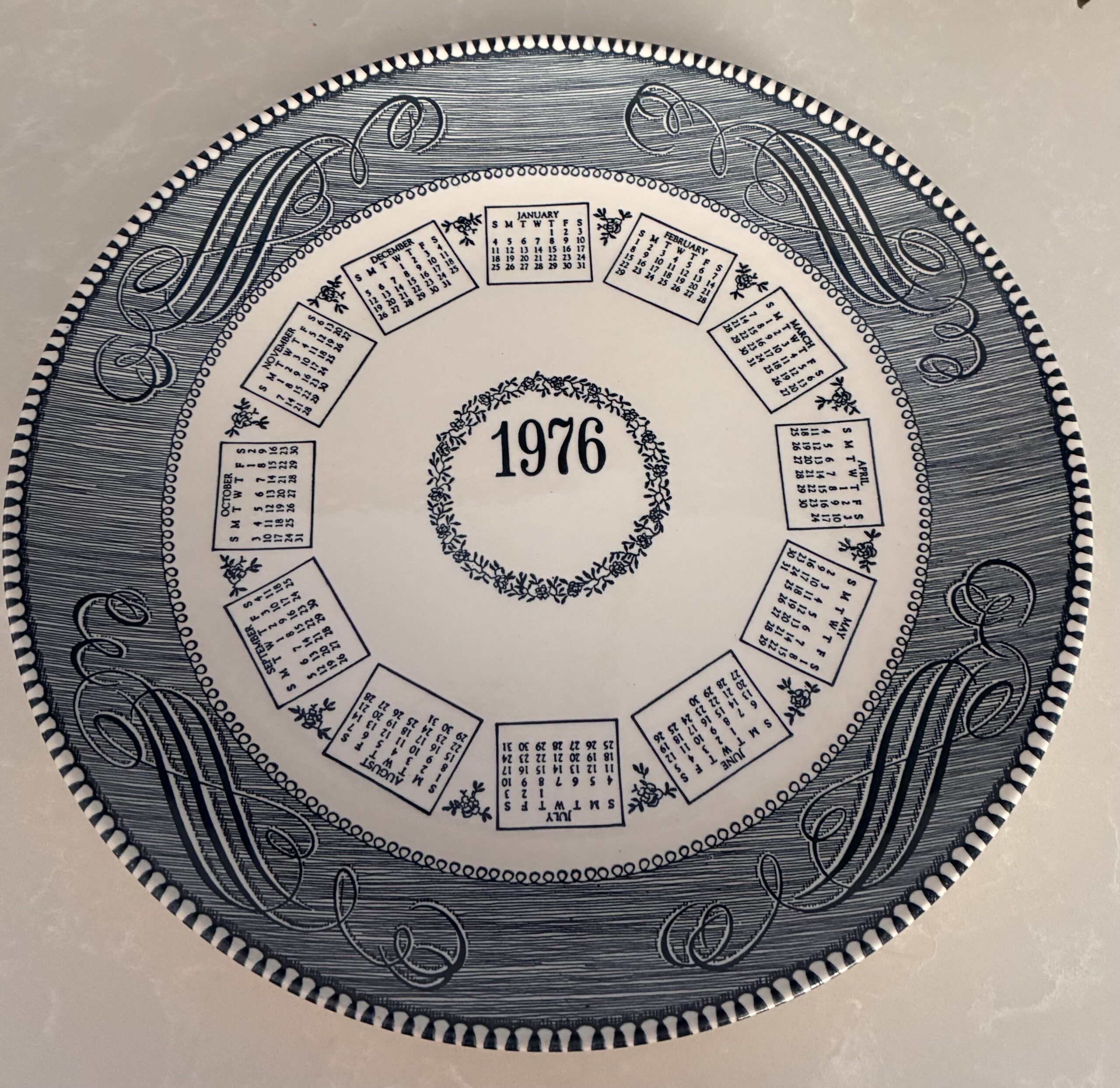
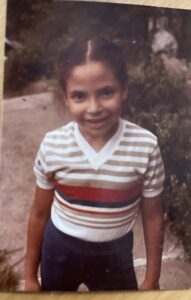
“Bicentennial baby”
I remember my grandmother telling me I was a “bicentennial baby”. She explained what it meant but as a small child I couldn’t understand the significance of a 200-year milestone. The term made me feel oddly special though in retrospect it seems like a marketing ploy to get families to buy commemorative stuff.
This year – as math and the march of time would have it – I’m turning 50. My life is committed to a movement to seize the possibilities in the present time to organize society to meet the needs of the majority. So I look back and study the original American Revolution to understand it beyond what I was taught in school, to get below the surface of the “great men of history” theory of the elite “Founding Fathers”.
The “Semiquincentennial”
In case you hadn’t heard, 2026 is the 250th anniversary of the founding of the United States as a nation state. There are a lot of official celebrations going on here in Pennsylvania, home to Philadelphia where the Declaration of Independence was signed in the State House of the time, later named Independence Hall.
Nonviolent Medicaid Army Study: The People’s History of the Revolutionary War Era
This past winter the Nonviolent Medicaid Army collectively undertook a study on the People’s History of the Revolutionary War Era. One of the goals was to understand “the history of the poor as a social force fighting the rich in a struggle for an expanded concept of rights; as well as over who is included and has rights”.
As our movement ancestor General Gordon Baker said “History is the rock we stand on, and if you’re not on the rock you’re on sand that will get swept right out from under you.” As a working class we’re woefully ignorant of the history of our class. We’re harmed by an education system that mis-educates us and tends to damage our innate love of learning. Social media fills the void of both our social isolation and our thirst for knowledge with an endless stream of content fed to us via algorithms that take away our agency. There is valuable content on X, TikTok, Instagram, Facebook and YouTube – if you know where to look – but they are not a substitute for studying actual texts.
Collective study is a powerful way to train ourselves with the skills it takes to make sense of the tidal wave of “content” we’re exposed to. That way we can decide what we should actually “ingest” and what we should reject, block, mute, hide, ignore, and/or counter. If active study, as opposed to passive viewing, seems hard or even impossible, that’s where collectivity saves the day. We support each other to understand the material. We draw parallels from our own experiences to make texts understandable. We provide audio recordings to make content more accessible.
Our study of the people’s history of the Revolutionary War Era left me profoundly hopeful. Nothing about the birth of this nation was a foregone conclusion. The entire process was shaped by struggle and our working class, Indigenous and enslaved ancestors were not passive but active participants – though they were not the ultimate victors.
Here are 7 lessons I came away with that are steeling me for organizing across Pennsylvania and the U.S. in 2026 and beyond and giving me profound hope for what our class can do. For each lesson I offer a source (audio/video/written excerpt) that we studied in our class.
- Indigenous genocide and erasure on this land was not a foregone conclusion. Native nations presided over this continent for thousands of years, and for hundreds of years even after the first European contact. Europeans had to adapt to and integrate into Indigenous systems well into the 18th century. That shifted because of the material realities of unequal power relationships, not because of superior systems of societal organization on the part of European elites. The history of some native nations in North America includes the development of class-based societies – which were then overcome/overthrown to restore right relationships. Some founding mythologies of Indigenous nations tell of undoing those unequal systems and taking apart the oppressive and exploitative class structures that emerged. Ruling elites have been outmatched on this very land, hundreds of years before the existence of the U.S. Learn more here.
- In the period leading up to the American Revolution, what would become the United States was just another set of British colonies and across the British colonial world, enslaved Black workers were in revolt. Abolitionists were tracking these uprisings. Enslaved people were taking advantage of the splits between the imperial and colonial elite. Writers and agitators who were propagandists in the growing movement for freedom from Britain were inspired by the enslaved Black workers. Their militancy and demand for freedom inspired and informed revolutionaries like Thomas Paine. Learn more here.
- When I first learned about the “regulators” a few years ago the only reference point I had was Warren G, who got that term from the Young Guns movie of 1988. A rather different version from those in Massachusetts, North Carolina and Western Pennsylvania during the time of the American Revolution. They called themselves “regulators” but the ruling elite called them rebels – they were small farmers, laborers, tenants and others engaged in a struggle against merchants and planters. They fought against economic exploitation in the form of regressive taxes, crushing debt and foreclosure. Disciplined bodies, often led by militia members or veterans, the regulators attracted widespread support with their vision to set up more representative government not simply catering to the rich. Learn more here.
- Did you know the working class had more power in the Pennsylvania legislature in 1776 than we do today – or at any time since? Tradespeople, shop owners, small farmers, workers and militia members joined forces, organized in their communities, held a provincial conference in June 1776 followed by a Constitutional Convention. The new constitution removed property-owning requirements from voting and established only one chamber in the general assembly, reducing the power of elite influence in the senate. Officials were re-elected on a yearly basis, and a watchdog group called the “council of censors” was established with the express purpose of reviewing government actions, investigating abuses and recommending changes to the constitution. This was a full-scale political takeover by radical forces during the Revolution and one of the most Democratic governments in the world at the time. Learn more here.
- Alexander Hamilton isn’t just the subject of a popular liberal musical. He was part of a faction of elites whose mission was to yoke the interests of the wealthiest people to the new nation – to create a national elite – by establishing a system where the elites became bondholders to finance the new national government. They also laid the groundwork for a system of federal taxation connected to the payment of interest to these wealthy federal bondholders. Learn more here.
- Immediately after the Revolution In 1787, the U.S. claimed what was then called “Northwest Territory” – Ohio, Indiana, Illinois, Michigan and Wisconsin. Washington and other founders were major land speculators who were counting on the returns from their investments west of the Appalachian mountains. Native nations rejected these claims and established a confederacy to resist being taken over. The Ohio confederacy defeated U.S. forces at “St. Clair’s defeat” on November 4, 1791 in one of the most significant military victories for Indigenous people in our history – that we never learn about. Military leaders Blue Jacket (Shawnee) and Little Turtle (Miami) defeated a U.S. force led by General Arthur St. Clair. This defeat led to the establishment of a federal standing army. Learn more here.
- Scattered across Allegheny, Fayette, Washington and Westmoreland Counties are references and monuments to the Whiskey Rebellion (1791-1794). However growing up as a kid in Monessen, I don’t think I ever learned about it. Whiskey rebels, or Pennsylvania “regulators” were not opposed to all taxes, or even taxes on whiskey. Most were poor white small farmers scraping together a living who used the small scale production of whiskey to make ends meet. This new tax was designed to hit small producers the hardest and drive them out of business. Hamilton and his cronies favored the consolidation of production into larger and larger private hands. The PA regulators (or “whiskey rebels”) and Indigenous nations had some shared grievances with the new federal government. Both saw it as an adversary. Both opposed federal land policies that favored large land companies and speculators.The ruling elite feared that there could even be some common cause among the Ohio Confederacy and the Whiskey rebels due to trade networks, mixed communities, and succession rumors. Washington raised a militia of over 13,000 men to put down the rebellion (they didn’t use the new federal army because, bad optics) leading them most of the way across the state. He left it to Hamilton to finish the job. Hamilton presided over a two month occupation of Southwestern PA, rounding up hundreds and marching dozens back on foot hundreds of miles to Philadelphia, where they were paraded through the streets on Christmas Day, 1794. Learn more here.
If you’d like more sources along these lines or to dig into some reading, I highly recommend these three books by William Hoagland: The Whiskey Rebellion, Autumn of the Black Snake, and Founding Finance. Study with the Nonviolent Medicaid Army every month on our Saturday School of Struggle and National Call. And get ready for this summer’s Solidarity School, a foundational course in understanding the set up of our economy and society.